WHAT IS IT?
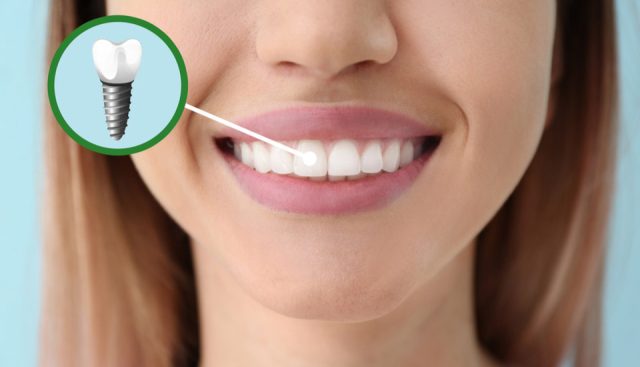
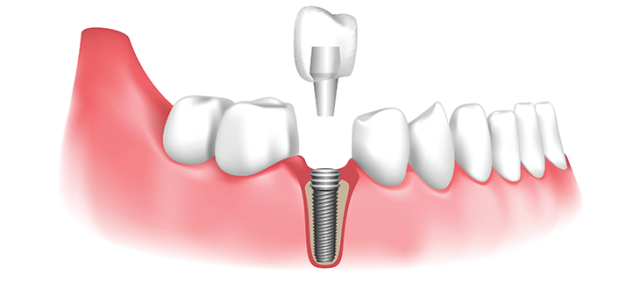
A kind of screw placed into the jawbone to replace the missing teeth, in other words, an artificial tooth root. This screw is made of titanium, a material which is compatible with tissues, nonallergenic and nontoxic and bonds firmly with the bone.
Implants allow us to fill the space of the missing tooth without having to cut the adjacent teeth. In addition, getting support from the implants, more useful prostheses providing better integration can be made.
In missing tooth replacements, implants outclass other methods in that they have a better appearance, provide better chewing and are more compatible with adjacent tissues. Implants are the most accurate missing tooth replacement method resulting in the most natural-looking teeth.
WHO NEEDS IT?
- Anyone older than 18 years old, in other words, having fully developed bones can have dental implants. There is no age limit for the process. Patients need to have bones in the place of the missing tooth of a sufficient quality and quantity and a good oral hygiene. In addition, they should not have gum problems and systemic diseases to jeopardize healing (those with uncontrolled diabetes, heavy smokers and immunosuppressed patients). Implants can be inserted once such problems are eliminated.
In the event of insufficient jawbones due to bone-thinning, first bone grafting or bone regeneration should be carried out before the implant is placed.
Dental implants are made of titanium and there is no scientific data proving that titanium causes cancer.
ANESTHESIA METHOD
- The surgery is performed under local anesthesia. If needed, sedation (administering sedatives through vein by a needle, which makes you drowsy) can be used in addition to local anesthesia.
- For overly stressed patients, general anesthesia may also be used in long operations.
HOW IS IT PERFORMED?
The duration of the treatment depends on the position of the missing teeth where the implant is to be inserted, bone structure, oral and general health of the patient and whether additional therapies will be required. The treatment involves an operation in which a small incision is made in the gum through where the titanium implant is placed within the jawbone, then the incision is sutured. The sutures are removed a week after the surgery. 2-3 months later, the prosthesis (fixed dental prosthesis) is attached to the implant and the treatment is completed. Total treatment can take 2 months or prolong up to 9 months in some patients.
- Laser Implant Treatment: This method allows to place the implant without incision and suture. In this method, the implant fuses with the bone faster. There is no need to wait for a week for suture removal since no suture is needed so the implant can be inserted and the patient can be discharged within the same day. If the implant is to be placed on a visible region, for anterior teeth replacement for example, a temporary prosthesis is fixed on the implant to preserve an aesthetic outlook in the 2-3-month waiting period. 2-3 months later, the temporary prosthesis is removed and the treatment is completed by attaching the permanent one.
In normal circumstances, the implant can be used for a lifetime. Therefore, one should adopt a thorough hygiene program and pay regular dental visits for check-up.